
Choosing pet names in Japanese is a wonderful way to give your pet a name that’s meaningful, memorable, and full of cultural charm. Whether you have a dog, cat, rabbit, bird, hamster, reptile, or any other beloved companion, Japanese names often carry beautiful meanings inspired by nature, seasons, colors, personality, and good fortune.
Japanese pet names are loved worldwide because they’re usually short, easy to pronounce, and rich in symbolism. Some names represent strength and courage, while others reflect sweetness, happiness, beauty, or the changing seasons. Whether you’re looking for a traditional Japanese name or something modern and unique, there’s a perfect option for every pet.
In this guide, you’ll discover hundreds of carefully selected pet names in Japanese organized into helpful categories. You’ll also learn how to choose the right Japanese name, understand the meanings behind popular names, and find inspiration that perfectly matches your pet’s appearance and personality.
Why Choosing a Japanese Pet Name Matters
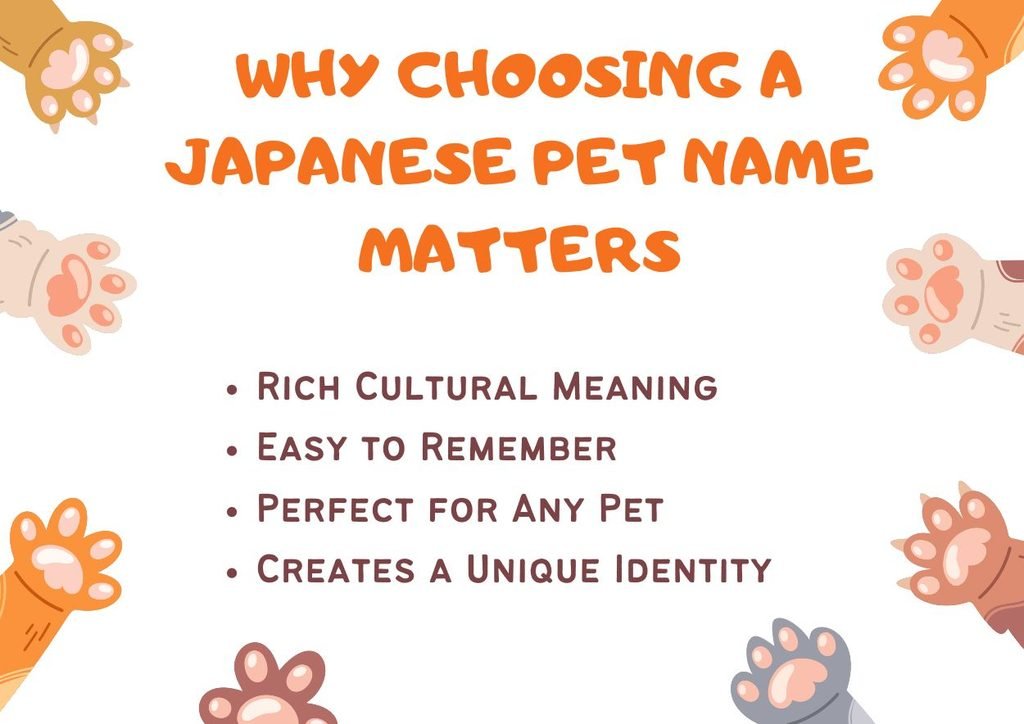
A thoughtful Japanese name adds personality and meaning while making your pet’s identity even more special.
Rich Cultural Meaning
Many Japanese names have beautiful meanings connected to nature, emotions, and positive qualities.
Easy to Remember
Most Japanese pet names are short, making them simple to say during everyday interactions.
Perfect for Any Pet
Japanese names suit dogs, cats, rabbits, birds, reptiles, fish, and many other companion animals.
Creates a Unique Identity
A meaningful Japanese name helps your pet stand out while reflecting their personality or appearance.
How to Choose the Perfect Japanese Pet Name
Choosing the right Japanese name is easier when you consider your pet’s unique characteristics.
Match Your Pet’s Personality
Think about whether your pet is:
- Calm
- Playful
- Curious
- Brave
- Gentle
- Energetic
Consider Appearance
Look at features such as:
- Fur or scale color
- Size
- Eye color
- Patterns
- Tail
- Unique markings
Learn the Meaning
Japanese names often have beautiful meanings, so choose one that reflects your pet’s personality or your wishes for them.
Keep It Easy to Pronounce
Select a name you and your family can comfortably say every day.
Try the Name First
Use the name for a few days to see whether it feels natural before making your final decision.
Best Pet Names in Japanese
Japanese pet names come in many styles, from cute and playful to elegant and powerful.
Cute Japanese Pet Names
Cute Japanese names are perfect for affectionate and lovable companions.
- Momo (桃) – Means “peach,” perfect for a sweet pet.
- Hana (花) – Means “flower.”
- Mochi (もち) – Inspired by the soft Japanese rice cake.
- Yuki (雪) – Means “snow,” ideal for white pets.
- Sora (空) – Means “sky.”
- Koko (ここ) – Short, adorable, and cheerful.
- Maru (丸) – Means “round,” perfect for chubby pets.
- Pochi (ポチ) – A classic Japanese pet name.
- Chibi (ちび) – Means “small” or “tiny.”
- Rin (凛) – Means “dignified.”
- Aki (秋) – Means “autumn.”
- Hoshi (星) – Means “star.”
- Kuma (熊) – Means “bear,” cute for fluffy pets.
- Niko (ニコ) – Inspired by smiling.
- Suzu (鈴) – Means “bell.”
- Tama (たま) – One of Japan’s traditional cat names.
- Mimi (ミミ) – Cute and easy to remember.
- Fuwa (ふわ) – Means “fluffy.”
- Purin (プリン) – Inspired by Japanese pudding.
- Kiki (キキ) – Bright and playful.
Unique Japanese Pet Names
If you’re looking for something uncommon, these names are both meaningful and memorable.
- Akira (明) – Means “bright” or “clear.”
- Haruki (春樹) – Means “spring tree.”
- Kaede (楓) – Means “maple.”
- Itsuki (樹) – Means “tree.”
- Hotaru (蛍) – Means “firefly.”
- Nozomi (望) – Means “hope.”
- Takara (宝) – Means “treasure.”
- Minato (港) – Means “harbor.”
- Aoi (葵) – Inspired by the hollyhock flower.
- Shion (紫苑) – Named after a beautiful flower.
- Ren (蓮) – Means “lotus.”
- Kazuki (一輝) – Means “one shining hope.”
- Hinata (陽向) – Means “sunny place.”
- Riku (陸) – Means “land.”
- Kohaku (琥珀) – Means “amber.”
- Ayame (菖蒲) – Means “iris flower.”
- Seina (星奈) – Means “star.”
- Haru (春) – Means “spring.”
- Nagi (凪) – Means “calm sea.”
- Izumi (泉) – Means “spring” or “fountain.”
Funny Japanese Pet Names
These playful names add humor while still sounding adorable.
- Wasabi – Inspired by the spicy Japanese condiment.
- Sushi – Perfect for food lovers.
- Tempura – A crispy and funny nickname.
- Ramen – Great for noodle fans.
- Miso – Inspired by traditional soup.
- Tofu – Cute for soft and gentle pets.
- Onigiri – Means “rice ball.”
- Matcha – Inspired by green tea.
- Dango – Sweet rice dumplings.
- Udon – Thick Japanese noodles.
- Nori – Seaweed used in sushi.
- Pocky – Inspired by the famous snack.
- Sake – A playful Japanese-inspired name.
- Yuzu – A fragrant Japanese citrus fruit.
- Bento – Inspired by Japanese lunch boxes.
- Daifuku – Sweet rice cake dessert.
- Mocha – A fun twist on Mochi.
- Katsu – Inspired by the famous Japanese dish.
- Shoyu – Means soy sauce.
- Taiyaki – Fish-shaped Japanese pastry.
Cool Japanese Pet Names
These names suit confident, adventurous, and energetic pets.
- Raiden (雷電) – Means “thunder and lightning.”
- Ryuu (龍) – Means “dragon.”
- Kenzo (健三) – Means “strong and healthy.”
- Kaito (海斗) – Means “ocean.”
- Hayate (疾風) – Means “swift wind.”
- Isamu (勇) – Means “courage.”
- Akio (昭夫) – Means “bright hero.”
- Daiki (大輝) – Means “great radiance.”
- Tora (虎) – Means “tiger.”
- Shin (真) – Means “truth.”
- Takeo (武雄) – Means “warrior.”
- Ryo (涼) – Means “cool.”
- Haruto (陽翔) – Means “sunlight.”
- Yamato (大和) – A classic Japanese name.
- Kai (海) – Means “ocean.”
- Kuro (黒) – Means “black.”
- Gin (銀) – Means “silver.”
- Sora (空) – Means “sky.”
- Ren (蓮) – Means “lotus.”
- Hikaru (光) – Means “light.”
Popular Japanese Pet Names
These timeless names remain favorites among Japanese pet owners.
- Yuki – Snow.
- Momo – Peach.
- Hana – Flower.
- Sora – Sky.
- Kai – Ocean.
- Maru – Round.
- Rin – Dignified.
- Mochi – Rice cake.
- Tama – Traditional cat name.
- Kiki – Cheerful and playful.
- Hoshi – Star.
- Aki – Autumn.
- Suzu – Bell.
- Ren – Lotus.
- Kuma – Bear.
- Haru – Spring.
- Niko – Smile.
- Fuwa – Fluffy.
- Kuro – Black.
- Shiro (白) – Means “white.”
Male Japanese Pet Names
Male Japanese pet names often represent strength, wisdom, bravery, and loyalty. They’re excellent choices for dogs, cats, reptiles, birds, rabbits, and other companion animals.
- Akio (昭夫) – Means “bright hero.”
- Daichi (大地) – Means “great earth.”
- Daiki (大輝) – Means “great radiance.”
- Haruto (陽翔) – Means “sunlight flying.”
- Hayato (隼人) – Means “falcon person.”
- Hiro (宏) – Means “generous.”
- Isamu (勇) – Means “courage.”
- Jun (純) – Means “pure.”
- Kaito (海斗) – Means “ocean.”
- Kenji (健二) – Means “strong and healthy.”
- Kenta (健太) – Means “healthy and strong.”
- Makoto (誠) – Means “sincerity.”
- Naoki (直樹) – Means “honest tree.”
- Ren (蓮) – Means “lotus.”
- Riku (陸) – Means “land.”
- Ryota (涼太) – Means “refreshing and great.”
- Shin (真) – Means “truth.”
- Takumi (匠) – Means “master craftsman.”
- Yamato (大和) – Symbolizes harmony and strength.
- Yuki (幸) – Means “happiness” or “good fortune.”
Female Japanese Pet Names
These elegant names are inspired by flowers, seasons, beauty, and positive qualities.
- Aiko (愛子) – Means “beloved child.”
- Akari (明里) – Means “bright light.”
- Aya (彩) – Means “colorful.”
- Ayumi (歩美) – Means “walking beauty.”
- Chika (千花) – Means “thousand flowers.”
- Emi (恵美) – Means “beautiful blessing.”
- Hana (花) – Means “flower.”
- Hikari (光) – Means “light.”
- Kaede (楓) – Means “maple.”
- Mei (芽依) – Means “bud.”
- Mika (美香) – Means “beautiful fragrance.”
- Miyu (美優) – Means “gentle beauty.”
- Nana (七) – Means “seven,” a lucky number in many cultures.
- Noa (乃愛) – Means “love.”
- Rina (里奈) – Means “jasmine village.”
- Sakura (桜) – Means “cherry blossom.”
- Sayuri (小百合) – Means “little lily.”
- Yui (結衣) – Means “gentle connection.”
- Yuna (優奈) – Means “kindness.”
- Yuzuki (柚月) – Means “citrus moon.”
Strong Japanese Pet Names
If your pet has a bold personality or powerful appearance, these names are excellent options.
- Arashi (嵐) – Means “storm.”
- Daichi (大地) – Means “great earth.”
- Gin (銀) – Means “silver.”
- Hayate (疾風) – Means “swift wind.”
- Isamu (勇) – Means “bravery.”
- Kaizen (改善) – Means “continuous improvement.”
- Kaminari (雷) – Means “thunder.”
- Ken (剣) – Means “sword.”
- Musashi (武蔵) – Inspired by the legendary samurai.
- Raiden (雷電) – Means “thunder and lightning.”
- Ryuu (龍) – Means “dragon.”
- Samurai – Inspired by Japan’s legendary warriors.
- Shogun – Title of Japan’s military rulers.
- Takeshi (武) – Means “warrior.”
- Tora (虎) – Means “tiger.”
- Yamato (大和) – Symbolizes strength and unity.
- Kage (影) – Means “shadow.”
- Kuro (黒) – Means “black.”
- Riku (陸) – Means “land.”
- Zen (禅) – Represents peace, focus, and balance.
Creative Japanese Pet Names
Creative names help your pet stand out while celebrating Japanese culture and language.
- Ame (雨) – Means “rain.”
- Aoi (葵) – Inspired by the hollyhock flower.
- Fuji (富士) – Named after Mount Fuji.
- Hoshi (星) – Means “star.”
- Hotaru (蛍) – Means “firefly.”
- Kumo (雲) – Means “cloud.”
- Midori (緑) – Means “green.”
- Mikan (みかん) – Japanese mandarin orange.
- Nami (波) – Means “wave.”
- Natsu (夏) – Means “summer.”
- Sora (空) – Means “sky.”
- Shizuku (雫) – Means “water droplet.”
- Suzume (雀) – Means “sparrow.”
- Takara (宝) – Means “treasure.”
- Tsuki (月) – Means “moon.”
- Umi (海) – Means “sea.”
- Yoru (夜) – Means “night.”
- Yume (夢) – Means “dream.”
- Yuzu (柚子) – Japanese citrus fruit.
- Zenko (善光) – Means “good light.”
Nature-Inspired Japanese Pet Names
Nature is deeply connected to Japanese culture, making these names meaningful and timeless.
- Asahi (朝日) – Morning sun.
- Fuji (富士) – Mount Fuji.
- Hana (花) – Flower.
- Haru (春) – Spring.
- Hayate (疾風) – Swift wind.
- Hinata (陽向) – Sunny place.
- Hoshi (星) – Star.
- Kaede (楓) – Maple.
- Kawa (川) – River.
- Kumo (雲) – Cloud.
- Mori (森) – Forest.
- Nami (波) – Wave.
- Sakura (桜) – Cherry blossom.
- Sora (空) – Sky.
- Take (竹) – Bamboo.
- Tsuki (月) – Moon.
- Umi (海) – Sea.
- Yuki (雪) – Snow.
- Yuzu (柚子) – Citrus fruit.
- Hotaru (蛍) – Firefly.
Naming Mistakes to Avoid
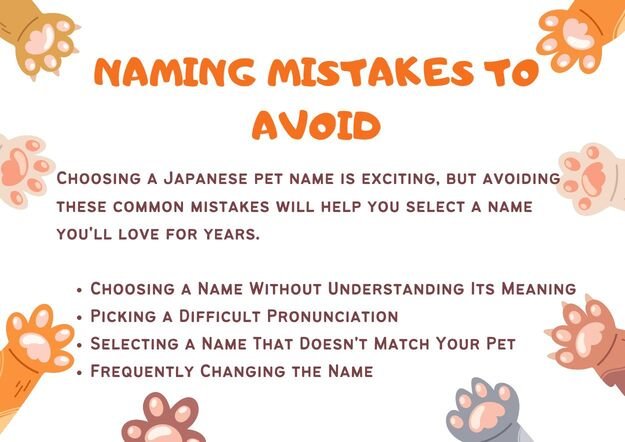
Choosing a Japanese pet name is exciting, but avoiding these common mistakes will help you select a name you’ll love for years.
Choosing a Name Without Understanding Its Meaning
Many Japanese words have deep cultural meanings. Always check the meaning before deciding on a name.
Picking a Difficult Pronunciation
Choose a name you and your family can pronounce naturally and consistently.
Selecting a Name That Doesn’t Match Your Pet
A tiny hamster named “Thunder” might be amusing, but a name that reflects your pet’s personality or appearance often feels more meaningful.
Frequently Changing the Name
Once your pet becomes familiar with a name, changing it repeatedly may create confusion.
Rushing the Decision
Spend a few days getting to know your pet before making your final choice.
How to Teach Your Pet Its Japanese Name
Even though every animal learns differently, many pets can associate their names with positive experiences.
Use the Name Consistently
Say your pet’s name during feeding, playtime, grooming, and gentle handling.
Pair the Name With Rewards
Offer treats, praise, or affection immediately after saying the name.
Keep Training Sessions Short
Practice for a few minutes each day to keep learning enjoyable.
Use a Positive Tone
Speak calmly and happily whenever you use your pet’s name.
Be Patient
Some pets respond quickly, while others need more time. Consistency is the key.
Frequently Asked Questions
What are the most popular Japanese pet names?
Popular Japanese pet names include Yuki, Hana, Mochi, Sora, Maru, Sakura, Kai, Hoshi, Kuro, and Tama because they’re meaningful, easy to pronounce, and suitable for many pets.
Are Japanese pet names suitable for all animals?
Yes. Japanese names work well for dogs, cats, rabbits, birds, reptiles, fish, hamsters, guinea pigs, and many other pets.
What does “Mochi” mean?
Mochi refers to a traditional Japanese rice cake. It’s become a popular pet name because it sounds cute and suits soft, fluffy, or adorable pets.
Is “Yuki” a good pet name?
Absolutely. Yuki usually means “snow” and is especially popular for white-colored pets. Depending on the kanji used, it can also relate to happiness or good fortune.
Should I choose a Japanese name based on its meaning?
Yes. Since many Japanese names have beautiful meanings, choosing one that reflects your pet’s appearance or personality makes the name even more special.
Are food-inspired Japanese pet names popular?
Very much so. Names like Mochi, Miso, Sushi, Matcha, Yuzu, and Dango are fun, memorable, and widely loved by pet owners.
Can I give a non-Japanese pet a Japanese name?
Of course. Many people around the world choose Japanese names because of their beautiful meanings and pleasant pronunciation.
How do I choose a unique Japanese pet name?
Consider your pet’s personality, color, favorite activities, or species, then choose a Japanese word that reflects those traits while being easy to pronounce.
Final Thoughts
Choosing pet names in Japanese is a meaningful way to celebrate your companion’s unique personality while embracing the beauty of the Japanese language. Whether you prefer adorable names like Mochi and Yuki, elegant choices like Sakura and Kaede, or powerful options like Raiden and Ryuu, the perfect name is one that feels natural and reflects your pet’s character.
Take your time, learn the meaning behind each name, and enjoy the process of finding a nickname that you’ll proudly use every day. A thoughtful Japanese name can become a lasting part of your pet’s story and strengthen the bond you share.

I am Jane Austen, a pet lover and writer with a passion for animals and creative pet names. I enjoy exploring the unique personalities, appearances, and little habits that make every pet special.
At PetNexes, I share helpful and creative ideas for naming dogs, cats, and other beloved pets. I write about cute, funny, unique, cool, and meaningful pet names to help pet owners find a name that feels just right for their companion.
I believe that a pet’s name is more than just a word—it becomes a special part of the bond between an animal and the person who loves them. Through my writing, I aim to make the naming process simple, enjoyable, and inspiring for every pet owner.
My Books
- The Perfect Pet Name Guide
- Creative Names for Beloved Pets
- Finding the Right Name for Your Pet